

In an eggshell...
- Egg freezing is the process of extracting eggs from mature follicles in the ovary
- This is done via a small surgery called egg retrieval
- The mature eggs are then frozen in liquid nitrogen and tucked away for future use
- You can use your frozen eggs by opting for ICSI, a fertility procedure where the eggs are inseminated with sperm
- The resulting embryos are then transferred to the uterus via an embryo transfer
Egg freezing isn’t a new thing anymore.
But there’s a high chance you’ve come across it on a social media post, in the news, or seeing a celebrity opt for it.
The point is, it’s been the talk of the town for quite some time, and for all the good reasons.
For today's generation, egg freezing is a reproductive health choice. It's a way of preserving fertility, empowering women to have control over their fertility timeline.
But the story doesn't end there. It is still a medical procedure, with its fair share of benefits and realities that you'll have to come face-to-face with.
But how exactly does it work, how much does it cost, and is it even worth it?
Well, we’ll have our embryologist explain it all for you!
Let’s get started.
What is Egg Freezing?
Egg Freezing is a procedure where your ovaries are stimulated to produce multiple mature eggs for freezing. You'll be on a medicated protocol for your ovaries to produce multiple follicles (which are sac-like structures that contain eggs).
These follicles grow to produce mature eggs, which are then retrieved from the ovaries via surgery and then frozen for later use.
The entire process from starting stimulation to the day of freezing your eggs is termed an egg freezing cycle.
It involves 5 phases: testing your baseline hormone levels, ovarian stimulation, egg retrieval, freezing the mature eggs, and then finally thawing them for fertility treatments and to achieve a pregnancy.
How Long Does Egg Freezing Take?
The egg freezing timeline in the UK is about 2-3 weeks, starting from your fertility tests or consultation to the date of the egg collection surgery and freezing your eggs.
Overall, this may even extend up to 5-6 weeks based on any additional tests or as per consultation waiting times.
And-get this- this timeline can extend and be expensive if you have to do the research yourself, figure out clinics, and shell out money to visit different doctors.
That’s exactly the gap Amilis is designed to fill. When you choose Amilis for your egg freezing cycle- you skip on all these. You cut down on waiting times and save on costs throughout your egg freezing cycle.
You get free mini consultations with fertility clinics or specialists across the UK, get discounts on your fertility tests (AMH, hormone panels, virology, PCOS) and get support throughout your egg freezing cycle.
How Does Egg Freezing Work?
The egg-freezing process typically starts with a fertility test or doctor consultations, and evaluating your ovarian reserve.
Here’s a quick breakdown:
Phase 1: Fertility Testing and Doctor Consultations
Even before you decide on an egg freezing cycle, you’ll be asked to test your fertility via an AMH (Anti-Mullerian Hormone) test and an ultrasound, called an AFC test (Antral Follicle Count).
Anti-Mullerian Hormone is released by growing follicles in our ovaries, and an Antral follicle count is an ultrasound that lets us visualise the number of growing follicles during a menstrual cycle.
These two combined help us assess our ovarian reserve, AKA how many eggs we have in our ovaries. AMH can be tested at any point during your cycle, but an AFC is best done during days 2-4 of your menstrual cycle.
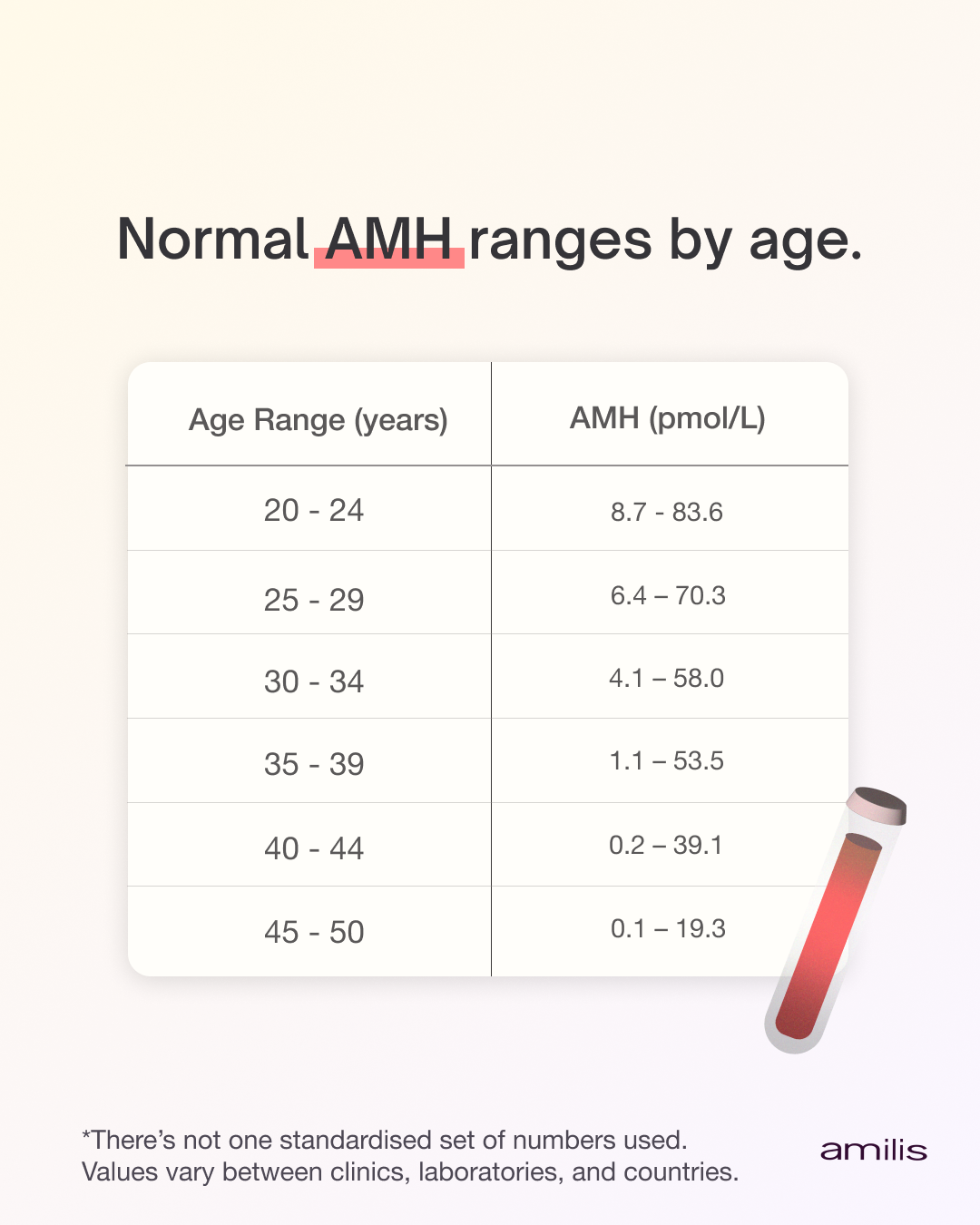
These tests are important as they help your doctor determine how your reserve is for your age, and the best protocol to go ahead with for egg freezing.
Phase 2: Ovarian Stimulation and Monitoring
This phase is where the egg freezing cycle actually starts. You'll be on a personalised medication protocol, where the goal is to encourage more than one follicle to grow at the same time.
Depending on your protocol, you may be started on a short course of birth control first — this isn't contraception in the traditional sense, it's simply used to time and sync your cycle before stimulation begins. From there, you'll move on to ovarian stimulation medications for around 7–14 days.
These medications contain the same hormones your body naturally uses to help follicles grow — FSH and LH — but at higher doses, so that multiple follicles develop rather than just one.
During this time, you'll come into the clinic for monitoring ultrasounds. These are quick check-ins where the doctor tracks how your follicles are growing and measures their size. Once 2–3 follicles reach around 16–22mm, your doctor will confirm the timing for the next steps.
At that point, you'll be asked to take a trigger shot. This triggers the final maturation of the eggs — and 36–38 hours later, you'll have your egg retrieval procedure.
Phase 3: Egg Retrieval Procedure

This is the stage where the mature eggs are retrieved from the follicles. It's a minor procedure — usually around 15–30 minutes — carried out under anaesthesia, so you won't feel a thing.
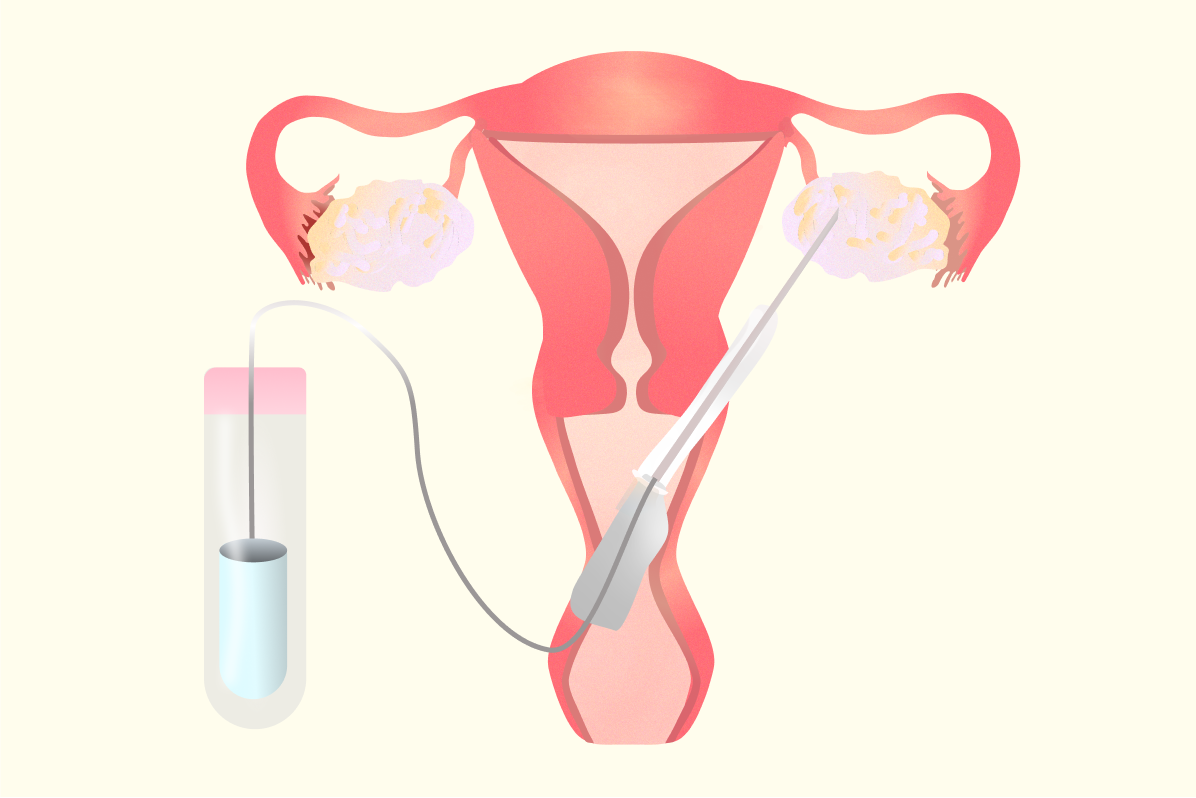
Using an ultrasound to guide them, the doctor locates the follicles and uses a fine needle to gently draw out the fluid inside each one. This fluid contains the mature eggs.
It's then passed straight to the embryology lab next door, where embryologists examine it under a microscope, identify the mature eggs, and set them aside for freezing.
After the procedure, you'll be moved to a recovery area to rest for a little while. And before you leave that day, you'll find out exactly how many mature eggs were retrieved.
Phase 4: Egg Freezing
Back in the embryology lab, the embryologists identify the mature eggs from the follicular fluid. At this stage, the eggs are surrounded by protective cells called cumulus complex cells — and before freezing, these need to be gently removed so the egg can be frozen properly.
This process is called denudation and occurs 2-3 hours after egg retrieval.
Once that's done, the eggs are frozen using a method called vitrification — essentially a flash freezing technique where the eggs are rapidly submerged in liquid nitrogen at -196°C.
A special freezing fluid is used alongside them, which protects the eggs from forming ice crystals during the process. At this point, the eggs become glass-like in structure — which is actually what preserves their quality so well when they're warmed later on.
Phase 5: Using The Frozen Eggs
This is the phase where you’ll use your frozen eggs. This could be days, weeks, months, or even years from the time of freezing — that's entirely your decision.
The good news is that the quality of your eggs stays the same however long they're stored.
When you're ready to use them, here's what happens:
- You let your doctor know, and they'll inform the embryology team to prepare your eggs
- The eggs are carefully thawed or warmed
- They're then fertilised with sperm — either from a partner or a donor — using a method called ICSI (intracytoplasmic sperm injection). ICSI is used because it gives each egg the best possible chance of fertilisation by injecting a single sperm directly into it
- The fertilised egg then develops into an embryo over the next 5–7 days
- The embryo is transferred to the uterus
Two weeks after the transfer, you'll take a pregnancy test. Your doctor may also ask you to do a beta hCG blood test, which measures the pregnancy hormone in your blood and gives a more accurate confirmation of whether the embryo has implanted successfully. It's the last step in a process that started with just one decision — to give yourself more options.
Where Are My Frozen Eggs Stored?
Your frozen eggs are stored securely in a special container within a liquid nitrogen tank, at -196°C. At this temperature, all biological activity essentially pauses — the eggs aren't ageing, and their quality stays exactly as it was on the day they were frozen.
The tanks are continuously monitored by alarms and refilled regularly to make sure the eggs remain frozen and undisturbed.
Clinic staff also carry out routine maintenance checks to ensure everything is functioning as it should. Most clinics are also regulated and inspected by the HFEA — the UK's fertility regulator — which means there are strict standards in place for how frozen eggs are stored and looked after.
Should I Freeze My Eggs?
So, is egg freezing really for you?
In fact, there’s no single reason why someone might opt to freeze their eggs. It can be a mix of medical and social reasons. Let’s look into it below:
Medical reasons, such as chemotherapy
Women who have been recommended chemotherapy can undergo egg freezing funded by the NHS to preserve their fertility.
This helps protect their eggs from the harmful effects of chemotherapy. Egg freezing allows you to preserve your eggs before starting treatment, so you have the option to conceive using your own eggs after recovery.
Focus on career and plans
Maybe you're focusing on your career or education now, but know you eventually want children. Egg freezing allows you to preserve your fertility when your eggs are genetically healthier.
Fertility naturally declines with age, so freezing your eggs in your 20s or 30s offers the best chance of success with future fertility treatments.
Recommended read: How many eggs should I freeze?
Personal reasons
You may not have found “the right partner” yet, or maybe you’re a woman in a same-sex relationship, wishing to have a baby in the future. Regardless, any personal reason or decision that supports your fertility timeline are valid reason to freeze your eggs.
Health concerns or ovarian surgery
Health issues such as stage 3 or 4 endometriosis can block the fallopian tubes and harm the ovaries, leading to infertility. In some cases, there could be fibroid growth in the uterus, which may need surgery. In similar cases, you may need advanced treatment such as surgery to remove large cysts or scar tissue.
Before this process, it’s recommended to freeze eggs. Either during the early stages of endometriosis, or prior to any ovarian surgery, which allows you to conceive with your own eggs after recovery, or use it as a backup option while trying to conceive naturally.
Have a low ovarian reserve
This is when the ovaries have a lower-than-usual number of eggs. This can happen naturally due to age or be caused by underlying medical or genetic conditions.
Pooling and freezing your eggs in this case, before your egg count declines further, may serve as a backup option when you’re ready to start trying!
Genetic Reasons
Women with a family history of early menopause or genetic risks (like Turner syndrome, fragile X, or BRCA mutations) may freeze eggs to protect against premature ovarian failure or before removing ovaries due to cancer risk.
Gender affirming treatments
People undergoing Gender-affirming treatments for transgender and non-binary people (such as hormonal or surgical changes that affect fertility) can choose egg freezing as a fertility preservation step.
Freeze your Eggs in the UK, via Amilis
Egg freezing is a very personal journey and a financial decision for your future fertility.
But without the right resources, navigating your egg freezing journey can be hard.
That’s where Amilis steps in.
Our team is here to help you figure out your options. Here's what you get when you choose egg freezing via Amilis:
- Free consultations with top reproductive health doctors in the UK.
- Free consultations with fertility clinics across the UK
- Discounted costs on fertility tests like-AMH, AFC, PCOS panel and Pre-egg freezing virology
And as always, you've got a stellar support team (that's us 👋) with you every step of the way.
Figuring out where to get started? Book a free call, or take our personalised fertility quiz to know more!
We're making healthcare accessible and affordable in the UK, one day at a time 💪🏻

.png)