



In an eggshell...
- Egg quality is about an egg’s ability to mature, fertilise, and support healthy embryo development, but there still isn’t one simple test that can measure it directly.
- In the lab, embryologists mostly infer egg quality from what they can see and from how the egg performs through fertilisation, freezing, thawing, and early embryo development, though visual morphology alone has limits.
- Some newer approaches, like polar body analysis, non-invasive testing, and AI-based image assessment, may add useful detail.
Egg quality is one of the most talked-about parts of fertility, but also one of the least explained.
While egg quantity is usually measured with an ovarian reserve test, the question often remains: how do we learn our egg quality, then? Is there a test for it?
And this is important to measure since we’re all born with a finite ovarian reserve; along with the number of your eggs, the quality declines with age too.
While there’s no blood test out there that directly tells us this, there are a couple of ways that embryologists and clinicians can gain insights into egg quality.
In this blog post, we’re covering that, and a bonus on how AI is helping us assess egg quality better too.
What is Egg Quality?
Egg quality refers to the oocyte’s developmental potential- or its ability to mature properly, fertilise, and go on to support healthy embryo development.
Measuring it is not as straightforward as an ultrasound test, but there are indirect methods or signs that embryologists and doctors look at.
Traditionally, it’s by looking at how the egg appears under the microscope and how it behaves through the process of freezing, thawing, fertilisation, and embryo development.
How is Egg Quality Assessed?
Egg quality is usually understood indirectly, as it has no direct test to measure it.
When you opt for an IVF/ICSI cycle, here are some instances where egg quality is assessed:
Polar body biopsy
During the oocyte maturation process, the egg releases a smaller cell called a polar body as a part of cell division. This polar body stays in the space between the outer membrane and the perivitelline space.
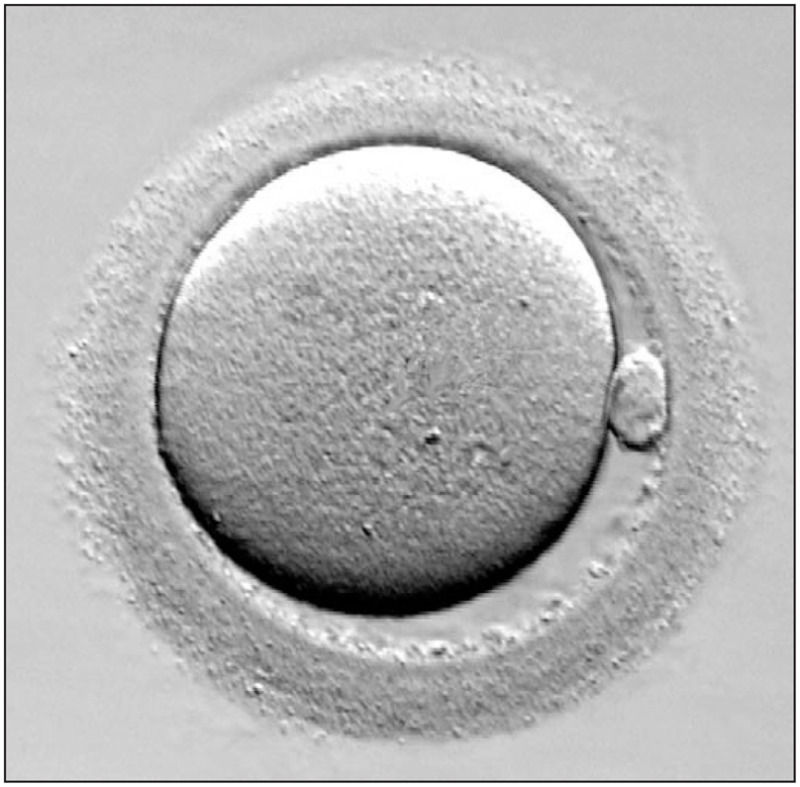
This polar body has the same genetic material as the oocyte. So analysing it gives us an insight into how the oocyte’s genetic material is.
In specific cases where there is a known maternal genetic or chromosomal concern, a polar body biopsy may be offered.
It’s a procedure performed by the embryologist in the lab where they carefully biopsy or extract the polar body from the oocyte and send it to the genetic lab for analysis.
This can help us identify any genetic issues in the oocyte- but it cannot account for any other developmental factors such as fertilisation or embryo development potential.
Egg Morphology and Development
Based on how the egg behaves in the lab, here’s what embryologists look for:
- How the egg looks under the microscope. Embryologists check the egg’s shape and visible features, like the cytoplasm, zona pellucida, perivitelline space, and polar body. Some differences in these structures may point to lower egg quality, but appearance alone cannot tell the full story. In fact, studies show that an egg's appearance to the human eye alone isn't a reliable way to predict its quality or developmental potential.
- How the egg behaves in the lab. This includes how well it freezes and thaws, and whether it fertilises normally post IVF/ICSI.
- How the embryo develops. If the egg fertilises and develops well, especially through the first few days and into the blastocyst stage, that can give useful information about its quality. This is because up to around day 3, much of that early development is still driven by the egg’s maternal instructions before the embryo’s own genome takes over.
So while there is no standard egg quality test, embryologists and fertility specialists can still learn a lot by seeing how the egg performs at each stage.
Recommended read: Mature vs Immature oocytes: What's the Difference?
Is there a Direct Way of Checking Egg Quality?
This is where things get a little complicated. Right now, there is no fully established test that can give a complete answer about egg quality.
For instance, polar body biopsy, is an option, but it’s invasive. It means working very closely with the egg, and while it can tell us a bit about the egg’s genetic material, it also involves extra handling that the egg would not normally go through. That’s one reason it isn’t used as a routine option for everyone.
However, AI is being used to fill that gap. AI-based image analysis is one of the more promising ways to add insight without disturbing the oocyte- and we’ll talk more about that below.
Where AI Fits In
AI is starting to change how we understand egg quality in fertility care. Instead of depending only on what the human eye can see during manual assessment, AI can look at images of mature eggs in a more consistent and detailed way.
What’s useful about that is that it can pick up subtle features that cannot be seen by the eye alone. When tested against experienced embryologists, AI image analysis was more accurate in predicting which eggs would fertilise and develop into usable embryos, and its assessments were fully consistent each time it was run. So it adds another layer of insight and makes the assessment less subjective.
That matters because egg appearance on its own can only tell us so much. More advanced tools like AI image assessment may help give a clearer picture before we get to the later stages of development.
What is the VIOLET™ report?
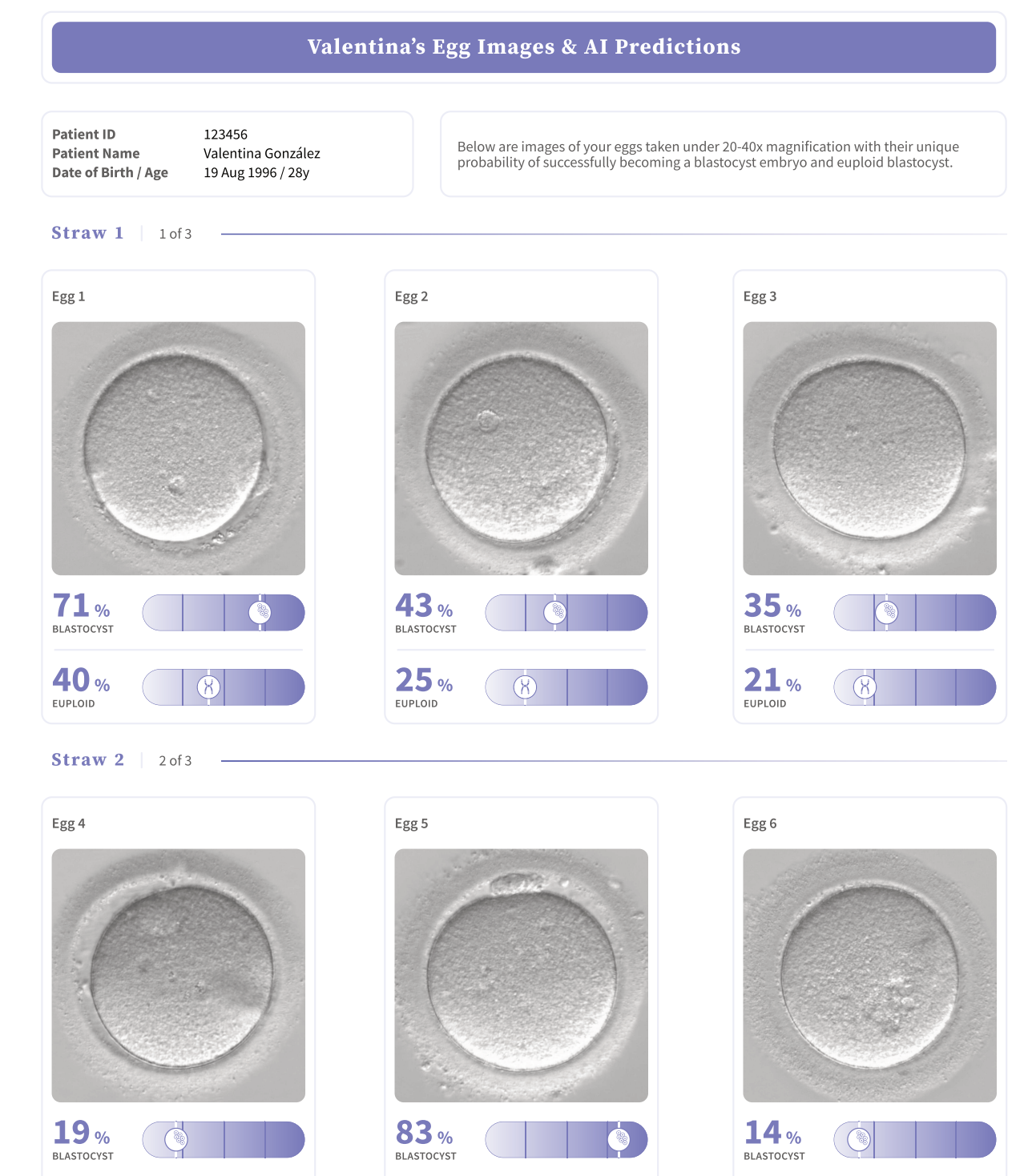
One example of this approach is Future Fertility’s VIOLET™ report, which uses AI to assess mature eggs after retrieval. VIOLET™ looks at patterns learned from the world’s largest dataset of egg images (over 650,000) and generates something that hasn't existed before: personalised estimates, specific to your eggs, from your cycle. It is designed for egg freezing patients, so it focuses on the details that matter most when you are trying to make sense of your results.
What makes the report valuable is how it shows egg-level predictions as well as cycle-level probabilities, giving patients a more specific view of how individual eggs may perform rather than relying only on age-based averages.
The report also includes:
- Blastocyst prediction, which estimates the likelihood that frozen eggs may successfully thaw, fertilise, and develop into day 5 to 7 blastocysts.
- Euploidy prediction, which estimates the probability of having euploid blastocysts, meaning embryos with the expected number of chromosomes.
- Live birth prediction, which models the chance of at least one live birth, and in some cases more than one, based on the assessed mature eggs and statistical modelling.
In other words, it takes information from the lab and turns it into a clearer picture of how those eggs may perform.
How Does VIOLET™ Help Patients?
For patients, one of the hardest parts of egg freezing or IVF is uncertainty. Getting a number of retrieved eggs is helpful, but on its own, that number does not always tell someone what those eggs may mean for their future fertility.
Here’s how the VIOLET™ can help in such cases:
- It can give more context than age alone, especially when patients want to understand how their individual cycle compares with population-based estimates.
- It can support more informed conversations with clinicians about whether to consider another egg freezing cycle, how to interpret outcomes, or what expectations might be realistic.
- It can make the process feel less abstract by translating lab assessment into outcomes patients actually care about, like blastocyst formation, euploidy potential, and live birth probability.
It’s important to note that the VIOLET™ report is not intended to replace patient-doctor consultation, and that predictions may be influenced by factors like image quality, semen analysis, and uterine receptivity assumptions.
How Amilis Can Help
If you’re based in the UK and trying to make sense of your fertility options, Amilis can help you take the next step with a bit more clarity and support.
Whether you’re thinking about egg freezing, going through IVF, or simply want to understand your fertility better, speaking to the right expert can make everything feel a little less overwhelming.
Amilis can support you by helping you:
- Book a free consultation with a fertility doctor to talk through your goals, questions, and next steps.
- Book a free consultation with fertility clinics across the UK and find one that feels right for your needs and location.
If you're not sure where to get started, you can also book a free chat with the Amilis team.
And if you’re looking for clinics that offer resources like these for egg quality, Manchester Fertility is one option to consider.
And if you’d like to learn more about Future Fertility’s VIOLET™ report, you can visit their website, take a look at a sample report, and get in touch with Future Fertility directly if you have questions.
Frequently Asked Questions
Is there an egg quality test?
Not exactly. There isn’t one simple test that can fully measure egg quality on its own. Instead, doctors look at a few different signs, such as how eggs appear under the microscope, how they fertilise, how embryos develop. Newer tools, like AI image analysis, are also being used to gain insights into egg quality., That said, these checks are still only part of the picture. Egg quality is complex, and a single result usually cannot give a complete answer by itself.
Can doctors check egg quality before fertilisation?
Traditionally, doctors have had to estimate egg quality indirectly—based on factors like age, the number of eggs retrieved, and how eggs and embryos develop after fertilisation. Before fertilisation, embryologists mainly look at eggs under a microscope, but research shows this kind of visual assessment alone is not a reliable way to understand egg quality or outcomes.
With advances in AI, it is now possible to analyze mature egg images in a more detailed and consistent way than the human eye can, offering earlier insights into egg quality alongside traditional assessment methods.
Does egg quality matter for egg freezing?
Yes, it does. When eggs are frozen, it is not only the number of eggs collected that matters, but also how well those eggs may survive thawing, fertilise, develop into embryos, and potentially lead to pregnancy later on.
That is why egg quality is such an important part of the conversation. Two people can freeze the same number of eggs, but the results can still be very different depending on how those eggs perform.
Is egg quality the same as ovarian reserve?
No, they are different. Ovarian reserve is about how many eggs a person has left, while egg quality is about how likely those eggs are to develop normally and support a pregnancy.
Both matter, but they answer different questions. Ovarian reserve helps show quantity, while egg quality is more about potential.
How to improve egg quality with PCOS?
With PCOS, you can’t really “test” egg quality directly, but you can improve the environment around the egg by managing insulin resistance, inflammation, and weight if that’s relevant for you. Things like regular movement, a balanced lower-glycaemic diet, and doctor-guided treatment can help, and supplements such as myo-inositol may support oocyte quality in some studies, but there’s no one-size-fits-all fix.