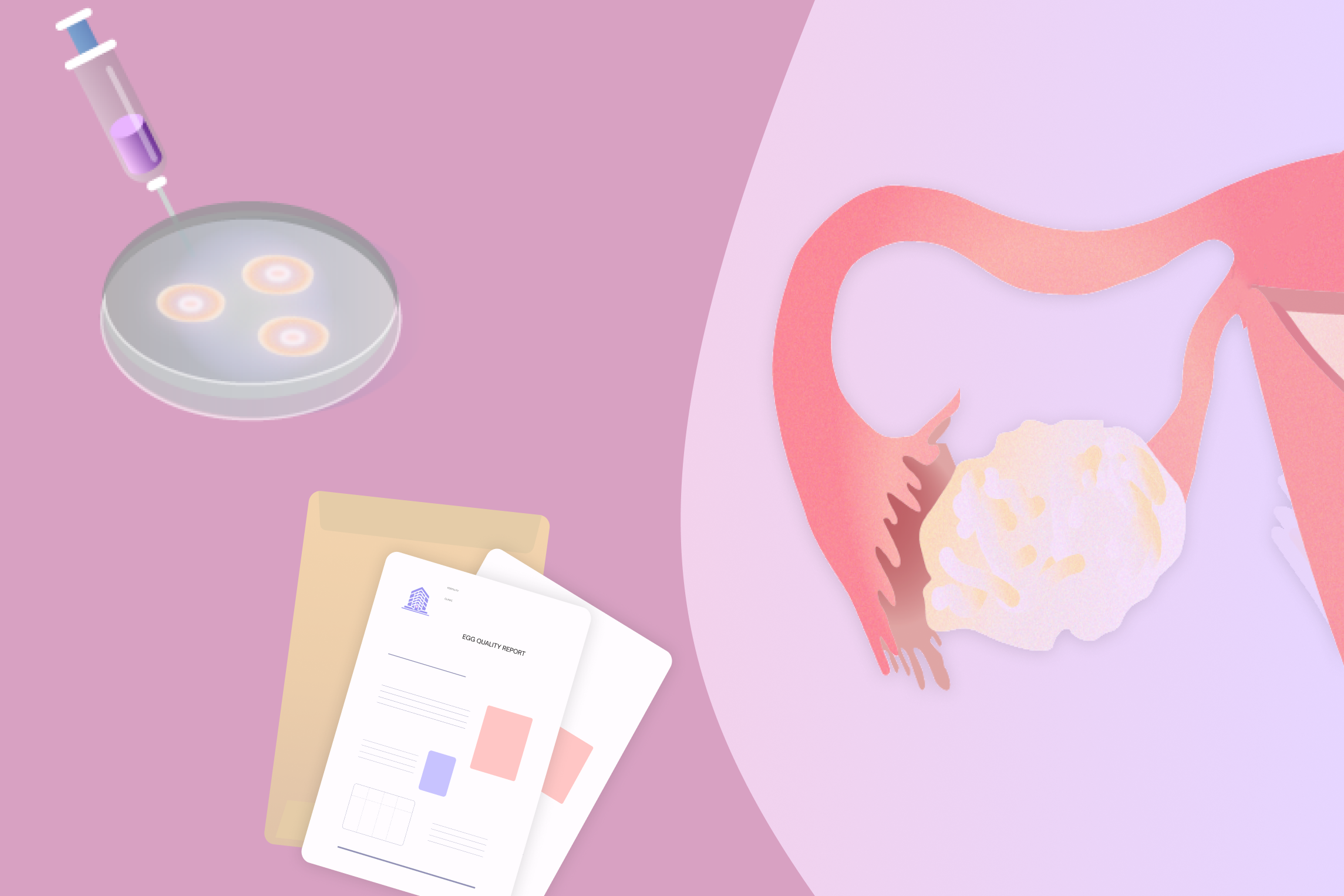


In an eggshell...
- IUI stands for intrauterine insemination, a treatment that places prepared sperm directly into the uterus around ovulation.
- IUI can be done with partner sperm or donor sperm, and it may be used for donor conception as well
- An IUI is not as medication-intensive as IVF and is often the first step for many before stepping into an IVF cycle
What is Intra Uterine Insemination?
Intrauterine insemination is an assisted reproductive procedure where sperm are placed directly into the uterus with the help of a catheter. The semen sample is washed and prepared in the lab to improve the concentration of sperm with better motility, and then inserted directly into the uterus, giving it a head start by bypassing the vagina and the cervix.
IUI is less invasive than IVF and usually involves fewer medications. Depending on the medication, there are two types of IUI:
- Unstimulated IUI- This doesn't involve medication, and your follicle growth is monitored throughout your cycle. The IUI procedure is planned on the day you are most likely to ovulate naturally.
- Stimulated IUI- This involves medication to promote egg growth and a trigger shot as well to induce ovulation.
What are the Types of IUI?
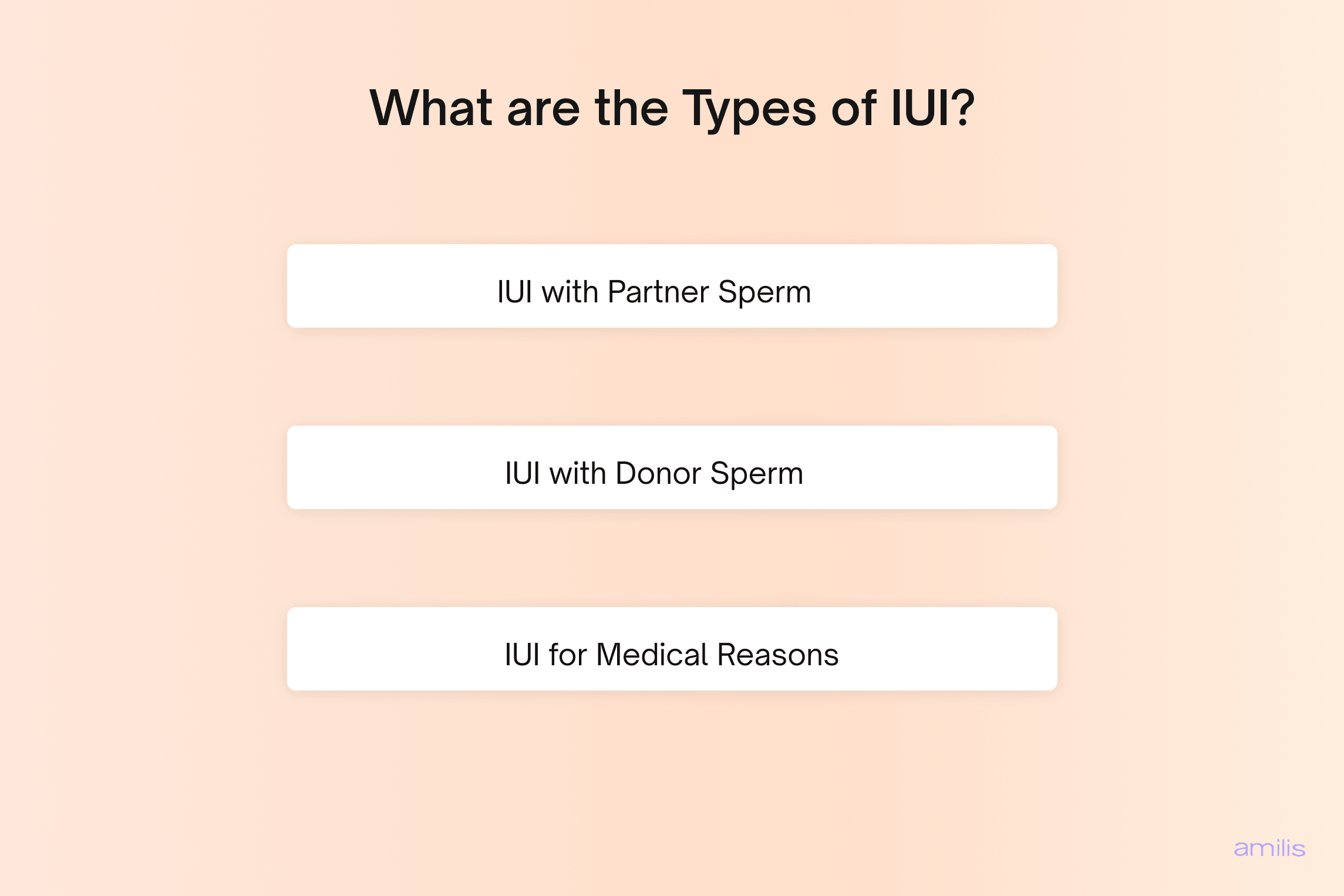
While the procedure stays the same, the source of the semen sample and the diagnosis or reason behind the procedure decide the type of IUI done:
IUI with your partner’s sperm
And IUI with your partner's sperm is usually decided post an initial semen analysis and when:
- sperm parameters are only mildly affected
- when timing is a challenge
- or when there are fertility factors that make a less invasive treatment worth considering first
It can also be considered for reasons such as mild endometriosis, lesser-than-average sperm motility, ovulation problems, essentially situations that warrant a milder treatment like IUI over an IVF cycle.
This also means that on the day of your IUI treatment, your partner should also be present to provide a fresh semen sample for the procedure.
IUI with donor sperm
IUI with donor sperm is a common treatment pathway in the UK. This involves choosing a frozen semen sample prior from a semen cryopreservation bank or from the clinic itself.
On the day of your IUI, this frozen sample will be thawed and used for your cycle.
This treatment may be relevant for single women, heterosexual couples using donor sperm.
This can also be an option for couples where the partner with male reproductive organs has azoospermia and surgical sperm retrieval is unsuitable or has failed.
IUI for medical reasons
IUI may be recommended for medical reasons when getting pregnant through sex is difficult, not possible, or not advisable.
As per NICE guidelines, unstimulated IUI should be offered before IVF in some situations, including when a person cannot or would find it very difficult to have vaginal intercourse because of a clinically diagnosed physical disability or psychosexual problem.
It can also be helpful in other medical situations, such as when donor sperm is needed, when there is a risk of passing on an infection through sex, or when sperm needs to be prepared before treatment.
How does Intra Uterine Insemination (IUI) work?
The IUI process usually starts with a clinic or doctor consultation, way before the insemination date. Here’s a quick rundown of the process:
Initial consultation with the clinic or doctor
Before your IUI cycle starts, the clinic will usually do a few checks to see whether the treatment is suitable and to plan the timing properly. These tests are there to help the team understand your hormones, your ovaries, and the sperm sample that will be used.
- Blood tests for hormones, such as AMH, FSH, LH, and estradiol, which help show how your ovaries are functioning and whether you are likely to respond well to treatment, will be done.
- Additionally, an ultrasound scan, usually a pelvic or transvaginal scan, to look at your ovaries and uterus and check how many follicles are starting to grow is also done.
- If you're using partner sperm, a semen analysis is included at the start to check sperm count, movement, and shape before the cycle begins.
- Blood screening for infections such as HIV and hepatitis may also be done for safety before treatment, especially where sperm handling is involved.
- If you are using donor sperm, the sample must already be screened, frozen, and suitable to use before the cycle starts
Follicular monitoring

This is the part of the IUI cycle where the clinic keeps an eye on how your ovaries are responding and, most importantly, when ovulation is likely to happen.
Monitoring usually involves ultrasound scans, and sometimes blood tests or urine ovulation tests, so the team can see whether a follicle is growing to the right size and whether the lining of the womb is developing well enough for treatment.
- In a natural cycle, you usually do not take fertility medication. The clinic checks your cycle with scans and possibly blood or urine tests, then times the insemination around your natural ovulation.
- In a medicated cycle, you may take medication to help a follicle grow. The clinic then monitors more closely, often with repeated scans and hormone checks, to make sure the follicle is developing properly and to reduce the chance of over-responding to medication.
In both cases, the goal is to identify the best moment for insemination, usually when one follicle is mature and ovulation is close.
The insemination day
On the day of treatment, the sperm sample is prepared in the lab first.
“If you are using partner sperm, the sample is washed and concentrated so the most active sperm are selected”, says Navya Muralidhar. “If a frozen semen sample is being used, it is thawed first and then prepared in the same way”
Here’s a quick run-through of what happens in the lab:
- Andrologists or embryologists use methods like density gradient centrifugation and swim-up to remove fluid and debris from the semen sample.
- The swim-up method helps concentrate motile sperm to improve the chances of fertilisation
- Some labs may also use devices like ZymOt, which follow the same principle but happen within a microfluidic chip or device
- The prepared sample is then loaded into a thin, flexible catheter.
- The doctor places the catheter through the cervix into the uterus and releases the sperm sample inside.
The procedure itself is usually quick and feels similar to a smear test. Most people can go home soon afterwards, and some clinics ask you to rest briefly before leaving.
Recovery post IUI procedure
Recovery is usually simple because IUI is a low-intervention procedure. Mild cramping or light spotting can happen afterwards, and that is often due to the catheter passing through the cervix.
- You usually do not need bed rest.
- Most people can return to normal daily activities the same day.
- It is still sensible to take things a little easier for the rest of the day.
- The main thing to follow is your clinic’s advice about when to take a pregnancy test, usually post two weeks.
Is IUI free on the NHS?
IUI is not routinely free on the NHS, but some people may be eligible depending on their situation and local NHS funding rules.
NICE recommends IUI for certain groups, such as people who cannot have vaginal intercourse and some donor sperm pathways, but for others, especially people with unexplained infertility, the NHS route may be less straightforward, so many people choose private treatment instead.
IUI success rates in the UK
IUI is less invasive than IVF, but it is also less successful per cycle, which is why it is often used when a simpler first step makes sense before moving to IVF.
Especially with IUI, the success rates depend on age, sperm quality, the cause of infertility, and whether the cycle is stimulated or unstimulated.
The research shows that results vary quite a bit by age and by how many cycles are done. In one study of 332 couples, the cumulative pregnancy rate reached 16% after the first three cycles and 26.9% by the sixth cycle, while the success rates were a bit lower when the women were over age 39 or when the total motile sperm count was low.
Another study found that pregnancy rates were higher in the first four cycles and that extra cycles could help in some groups, especially when ovulation problems were part of the picture.
Age also makes a difference. A PubMed review found that women aged 40 to 42 had a live birth rate of 9.8% per insemination in one study, and a 2022 review found that for women 40 and older, the chance of live birth with IUI was generally low, especially with partner sperm.
That is why doctors often look at IUI as a less invasive option to try before IVF, rather than a guaranteed treatment path
IUI treatment costs in the UK
IUI in the UK is usually much cheaper than IVF, but the final price can vary depending on what is included. The biggest cost differences usually come from whether you are having a natural cycle or a medicated one, how many scans and blood tests are needed, whether sperm preparation is included, and whether donor sperm is being used.
How much does IUI cost in the UK?
A private IUI cycle usually costs around £1,265 on average, but the final price can rise depending on whether you need medication, scans, blood tests, or donor sperm.
For example, at one of our partner clinics, Aria Fertility, the advertised IUI cycle fee is £1,300, and the estimated total is £1,550 once average medication and monitoring bloods are included.
If donor sperm is used, extra charges can apply, including the HFEA fee for donor insemination and the cost of the sperm itself, so the total can go up further. Some clinics also offer multi-cycle IUI packages, which can make sense if you are planning more than one attempt.
That is why IUI costs can look very different from one clinic to another. The final price depends on what your cycle needs, such as medication, scan monitoring, blood tests, and whether you are using partner sperm or donor sperm.
At Amilis, we help reduce the overall cost by offering free consultations with partner clinics and discounted pricing on selected fertility tests and services, which can make the total IUI journey more affordable.
How Amilis Can Help
IUI can feel like a big step- but we’re here to make it less overwhelming.
When it comes to choosing the best IUI clinic in London, the right fit matters more than anything.
At Amilis, we help make that next step easier by connecting you with vetted fertility clinics, offering free clinic consultations, and giving you access to free doctor consultations so you can talk through your options before you commit.
If you are just getting started, you can also take our fertility quiz to get a better sense of where you are and what might make sense next.
And if you want to hear more about the people behind Amilis, or ask us a question directly, you can chat with our founders too.
What matters most is finding a path that feels informed, supported, and realistic for you.
If an IUI is the right next step in your journey, we are here with all the resources that can help you on your journey!
Frequently Asked Questions
How much does IUI cost in London?
IUI in London is usually at the higher end of the UK price range because clinic fees, monitoring, medication, and donor sperm costs can all add to the final bill, so the final price depends on your treatment plan and the type of sample being used
Which are the best IUI clinics in London?
The best clinic depends on what you need, because fertility treatment is personal and the right choice for one person may not be the right one for another. On Amilis, you can compare vetted London clinics by price, location, and treatment options, and book a free consultation with partner clinics. This makes it easier to compare your options before committing. We also help patients reduce the overall cost of their journey by offering free initial consultations and discounted pricing on selected fertility services
Is IUI legal in the UK?
Yes. IUI is a legal fertility treatment in the UK when it is carried out through a licensed fertility clinic. HFEA regulates fertility treatment and donor use in the UK.
Is IUI cheaper than IVF?
Yes, usually. HFEA says one cycle of IUI is typically about a quarter of the price of one IVF cycle. Even so, the total cost can climb if multiple IUI cycles are needed.
Is IUI painful?
Most people find IUI manageable. It can feel uncomfortable, a bit crampy, or similar to a smear test, but it is usually quick and does not require surgery.
How successful is IUI?
There is no single success rate that fits everyone. HFEA says IUI is generally less successful than IVF, and outcomes depend on age, diagnosis, sperm source, and how many cycles are tried.
Can IUI work with donor sperm?
Yes. In fact, donor sperm IUI is one of the clearest and most established uses of the treatment in UK guidance. NICE recommends donor sperm IUI in preference to intracervical insemination because it improves pregnancy rates.